Turnkey planning, realisation and commissioning of photovoltaic systems. Over 15 years of experience in the solar sector.


Grid connection planning
Construction planning and landscape planning
Occupancy and interconnection planning
Medium-voltage and protection concept

Long-standing purchasing relationships
AAA solar modules, Tier 1
Own low-voltage components

Own DC & AC assembly teams
Own compact station production
With Faber Solartechnik GmbH and Faber E-Tec GmbH, the Faber family of companies offers you a unique approach to the holistic planning and realisation of a solar power system from low voltage to medium voltage and direct current to alternating current. Faber Solartechnik plans and installs your PV system, while Faber E-Tec creates the grid connection with compact stations from its own production. A combination of photovoltaics and medium voltage that is unique in Germany.
We see the modules before they are installed and the cables before they are laid. We plan your PV system from the first steps through to final commissioning, taking into account both the DC and AC sides: our experienced team of project developers and engineers will create your customised system schedule.
Good purchasing is crucial to the success of a PV system: it saves costs, ensures quality, enables timely deliveries, manages risks and promotes ethics and sustainability. We invest in solid processes and stable supplier relationships to ensure your long-term success.
With project-specific planning at hand and the optimum components on site, we start the construction phase for you: our in-house installation teams install your PV system on any surface and without size limits. Thanks to fixed teams and structures, we have full control over the quality of the construction process for you.
Based on a customised 3D model of your site, we plan the possible nominal PV output and calculate key technical data such as power generation, self-consumption and grid feed-in. In doing so, we take into account the local conditions as well as the technical, legal and economic framework conditions.
You will receive a customised offer from us for a turnkey PV system. Our offers always include an all-inclusive price for all components and work steps required for installation and commissioning as well as a profitability calculation for your planning.
Once the offer has been signed, we take care of the detailed planning and procurement of the components as well as the clarifications and approvals with the grid operator and, in the case of rooftop systems, the structural analysis. In the case of ground-mounted systems, the building permit planning and the inspection of the respective soil conditions are required instead of the structural analysis.
Once all construction preparations have been completed, our in-house construction teams arrive at your site. For a 1,000 kWp PV system, we will be on your roofs for around 3 weeks. The construction phase ends with the remuneration-related commissioning, i.e. the proof of function of the system to the Federal Network Agency.
As soon as your PV system is operational, it must be connected to the public grid. This also includes the grid operator-compliant installation of protection parameters such as NA protection, QU protection or decoupling protection from our own planning and production. If you already have a power supply at your location, we will of course include this in our planning.
For the first 2 years, we take care of the maintenance and servicing of your PV system as standard. Experience shows that most problems, e.g. due to production faults, occur during this period. After that, you can count on PV electricity from your own system for at least the next 30 years.

Based on a customised 3D model of your site, we plan the possible nominal PV output and calculate key technical data such as power generation, self-consumption and grid feed-in. In doing so, we take into account the local conditions as well as the technical, legal and economic framework conditions.

Once the offer has been signed, we take care of the detailed planning and procurement of the components as well as the clarifications and approvals with the grid operator and, in the case of rooftop systems, the structural analysis. In the case of ground-mounted systems, the building permit planning and the inspection of the respective soil conditions are required instead of the structural analysis.

As soon as your PV system is operational, it must be connected to the public grid. This also includes the grid operator-compliant installation of protection parameters such as NA protection, QU protection or decoupling protection from our own planning and production. If you already have a power supply at your location, we will of course include this in our planning.

You will receive a customised offer from us for a turnkey PV system. Our offers always include an all-inclusive price for all components and work steps required for installation and commissioning as well as a profitability calculation for your planning.

Once all construction preparations have been completed, our in-house construction teams arrive at your site. For a 1,000 kWp PV system, we will be on your roofs for around 3 weeks. The construction phase ends with the remuneration-related commissioning, i.e. the proof of function of the system to the Federal Network Agency.

For the first 2 years, we take care of the maintenance and servicing of your PV system as standard. Experience shows that most problems, e.g. due to production faults, occur during this period. After that, you can count on PV electricity from your own system for at least the next 30 years.
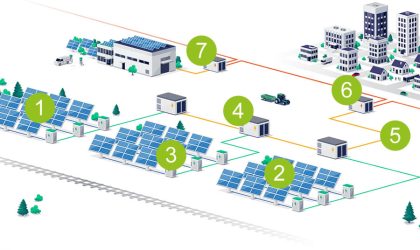
ModulesThe centrepiece of every PV system. We only install modules of the highest quality for you, which get the maximum out of the sun's rays. We rely on renowned manufacturers such as JA Solar, Trina Solar or Ryzen, which have the best bankability criteria.
SubstructureWhether south, east-west or north-north: the decisive trend in the construction of PV systems is "flat". Flat mounting enables more even power generation with better utilisation of space. In times of negative electricity prices during sunny midday hours and a tough battle for the best areas, this is an economically inevitable trend.
InverterOver 1,000 volts DC voltage becomes AC low voltage: Depending on the size of the system, we use 400 or 800 volt multi-string inverters. This enables us to achieve optimum performance values without taking too great a cluster risk in the event of a defective inverter. We create the wiring plan for each individual system during the planning phase.
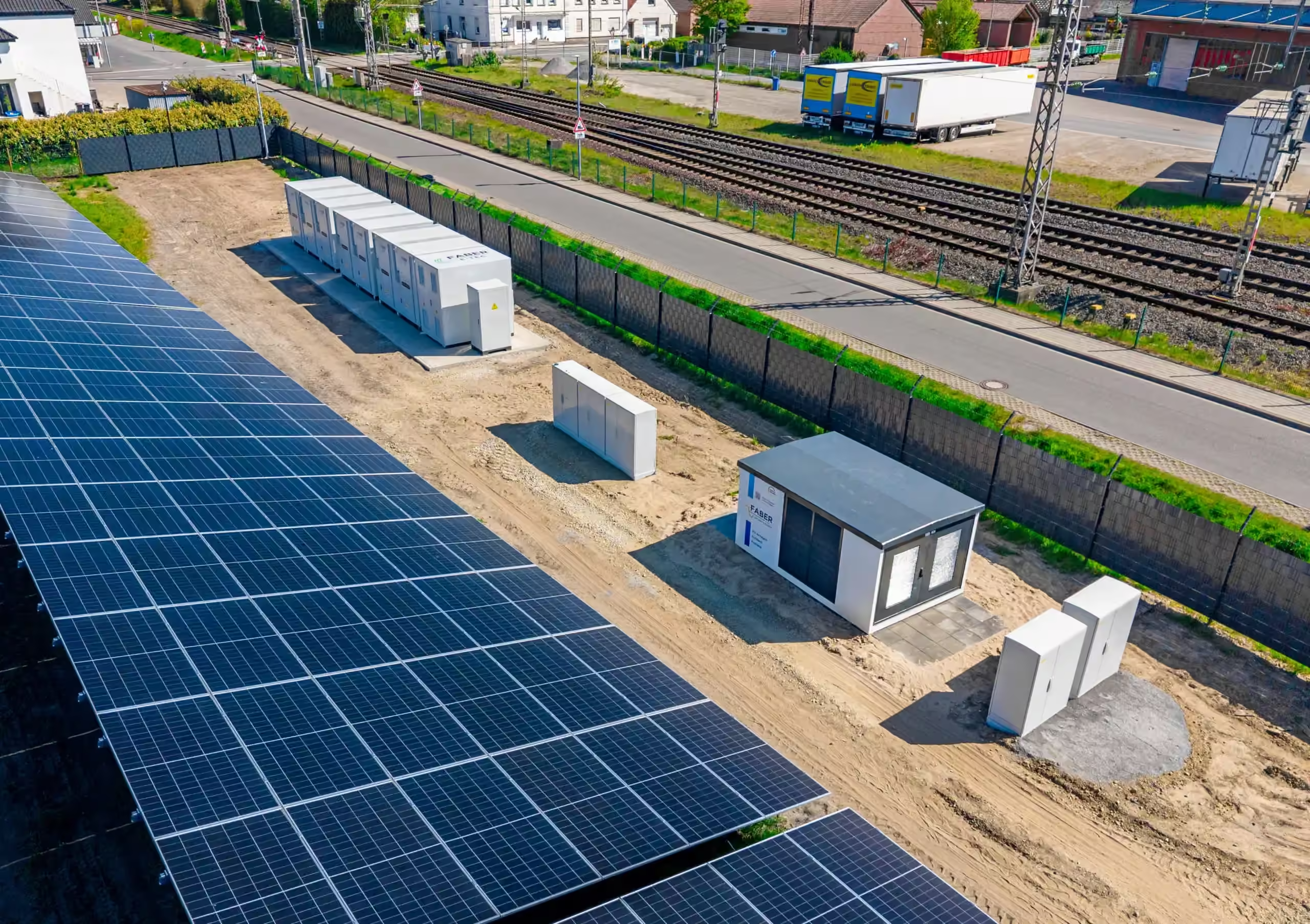
Transformer compact stationsWe can connect up to almost 3 MWp of PV power to each of our in-house transformer compact stations. These pick up the low voltage from the inverters and bring the electricity up to grid voltage, e.g. 20 kV. Thanks to our in-house production under the Faber E-Tec umbrella, we also have this step fully under control.
Medium voltageIf several stations are required, we connect the individual transformers to medium voltage. The exact voltage level between 10 kV and 30 kV is based on the voltage of the public supply network.
Network handoverA certain distance between the PV park and the public grid is not uncommon, especially in the ground-mounted segment, meaning that a dedicated transfer station must be installed in the immediate vicinity of the grid connection point. We also supply this station, including switchgear, measuring cell and protection technology, from our in-house production.
Combined Transfer transformer stationIf the grid operator's medium-voltage cables run directly to the location of the generation system, we can also realise the grid transfer and transformer in one station. This saves you space and costs. In this case too, the power limit is 2,500 kVA per station.
The centrepiece of every PV system. We only install for you Modules the highest quality, making the most of the Sunbeams out. We rely on renowned manufacturers such as JA Solar, Trina Solar and Ryzen, which have the best bankability criteria.
Whether south, east-west or north-north: the decisive trend in the construction of PV systems is "flat". A flat elevation enables more even electricity generation with better Space utilisation. In times of negative electricity prices during sunny midday hours and a tough battle for the best spaces, this is an economically inevitable trend.
Over 1,000 volts DC voltage becomes AC low voltage: Depending on the size of the system, we use 400 or 800 volt multistringInverter. In this way, we achieve optimum performance values without taking too great a cluster risk in the event of a defective inverter. We create the stringing plan for each individual system during the planning phase.
We can connect up to almost 3 MWp of PV power to each of our in-house Transformer compact stations connect. These pick up the low voltage from the inverters and bring the current up to mains voltage, e.g. 20 kV. Thanks to our in-house production under the Faber E-Tec umbrella, we also have this step fully under control.
If several stations are required, we connect the individual transformers to Medium voltage. The exact voltage level between 10 kV and 30 kV is based on the voltage of the public supply grid.
Particularly in the ground-mounted segment, a certain distance between the PV park and public network not uncommon, so that a dedicated transfer station in the immediate vicinity of the Grid connection point must be installed. We also supply this station, including switchgear, measuring cell and protection technology, from our in-house production.
If the grid operator's medium-voltage cables run directly to the location of the generation system, we can Network handover and transformer in one station. This saves you space and costs. In this case too, the power limit is 2,500 kVA per station.

The origin of photovoltaics in Germany and still the backbone of the expansion of renewable energies today. Commercial rooftops offer ideal conditions for the rapid development of solar systems without competition for space and with the possibility of attractive self-sufficiency.

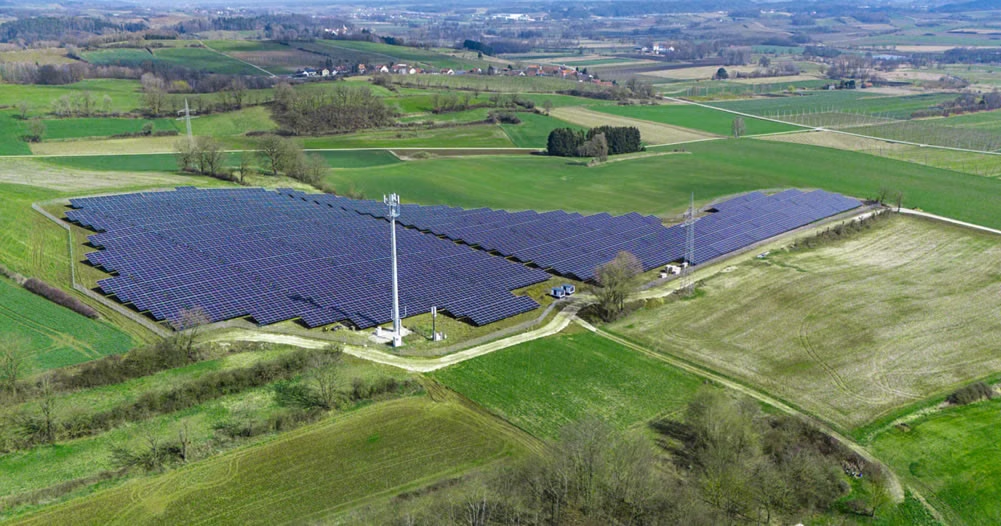
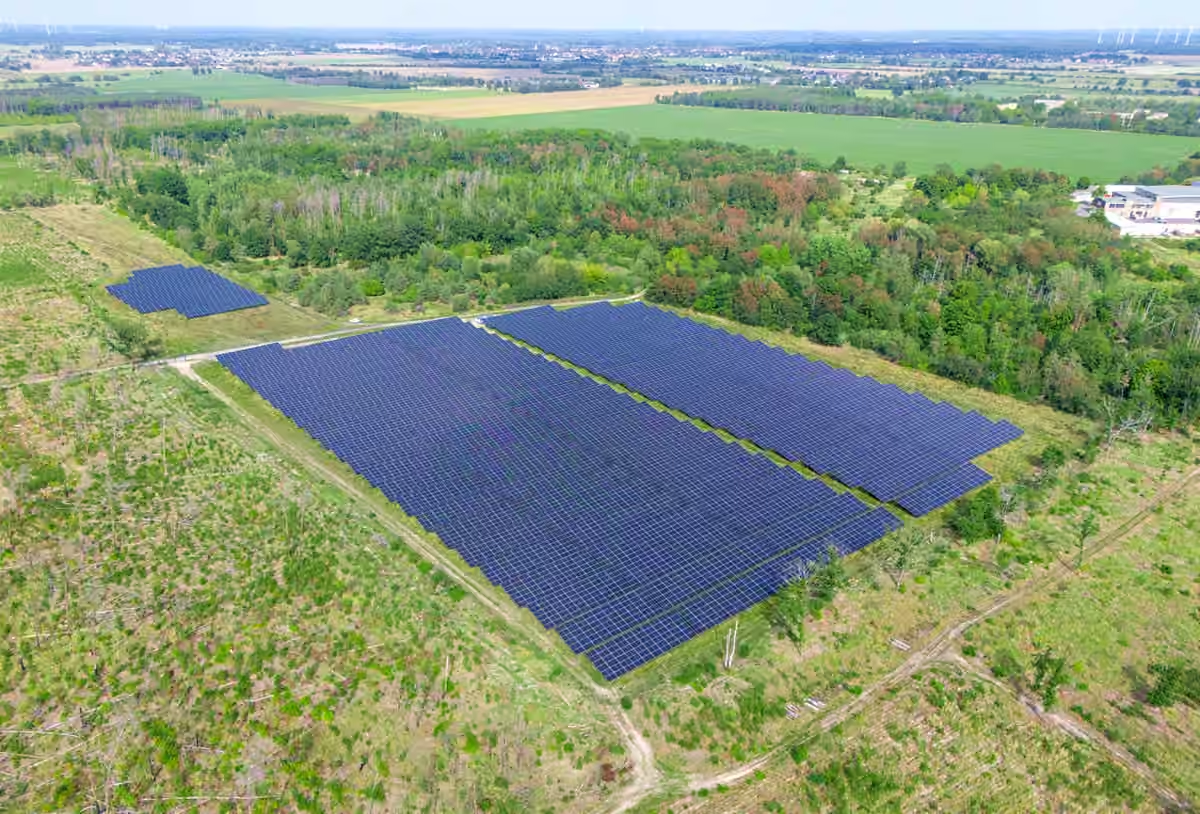
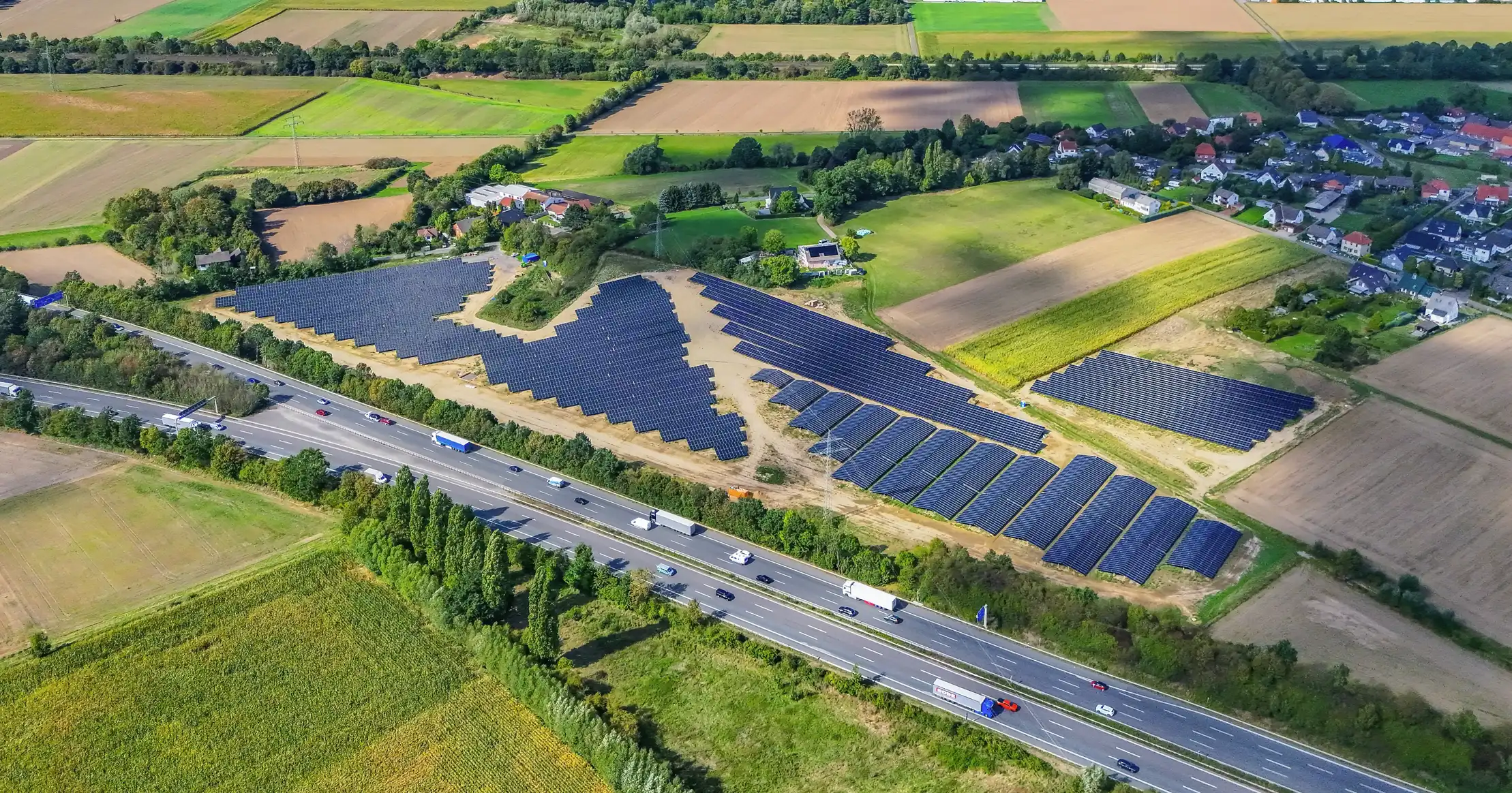
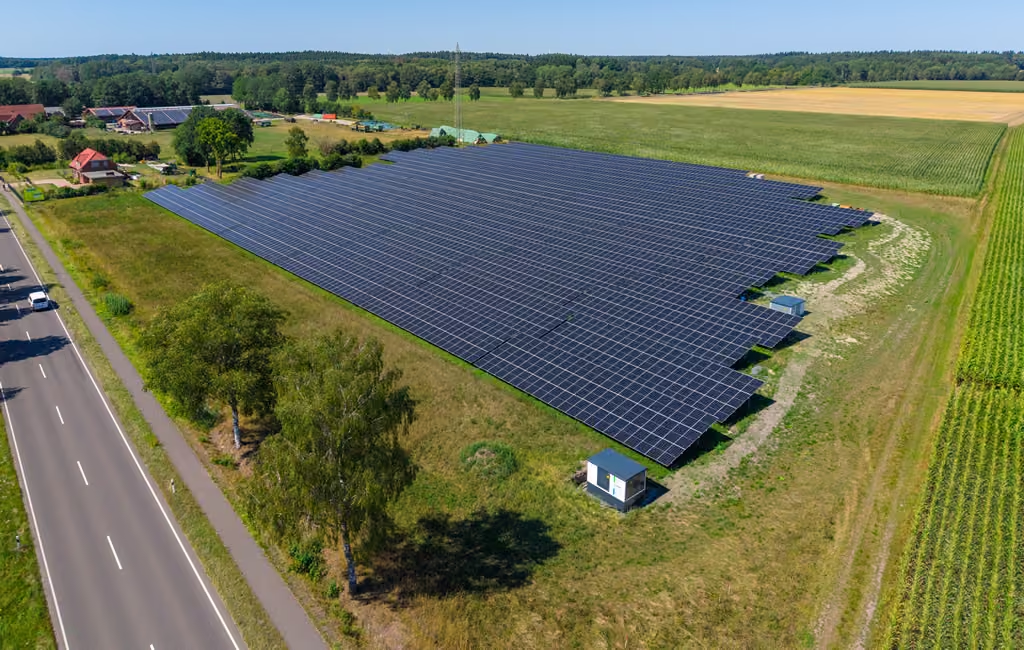
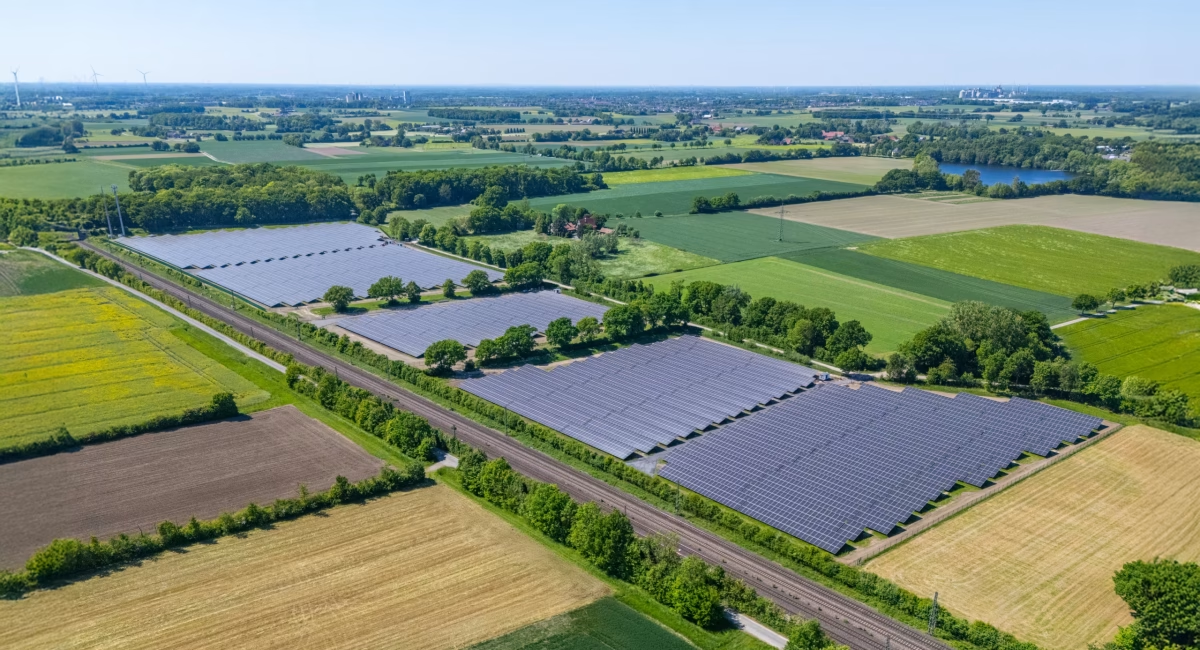
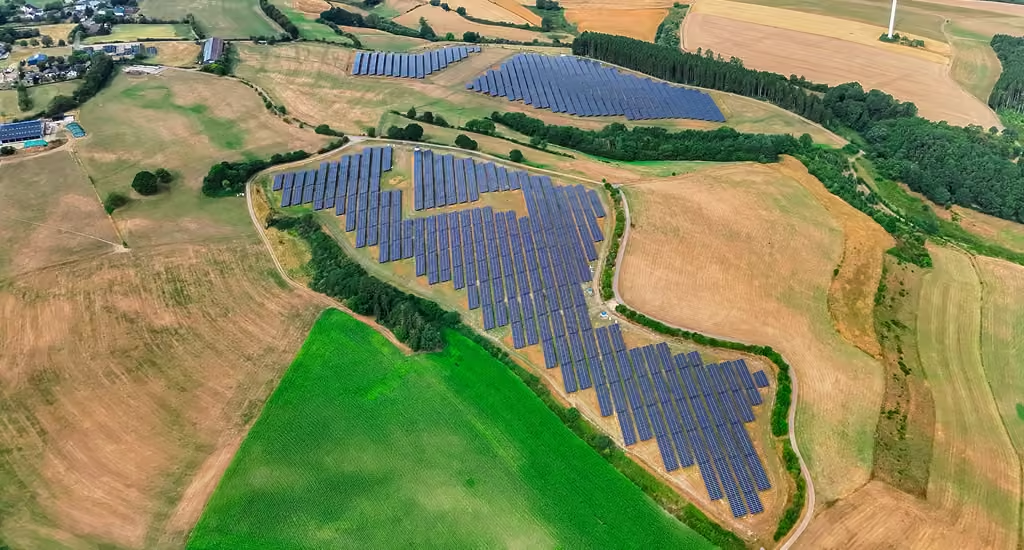
Whether along motorways or railway tracks, on contaminated, converted or brownfield sites: In order to satisfy Germany's and the world's hunger for energy, we need large-scale photovoltaic systems that can compete directly with coal and the like, even without EEG funding.

The latest development in the field of photovoltaics and a true efficiency miracle: Floating photovoltaic systems utilise previously unused water areas of gravel lakes, for example, are up to 10% more productive thanks to water cooling and noticeably improve the water quality by shielding it from direct sunlight.


Discover our extensive selection of references, projects
and the latest news.
We are delighted that our work for the major project ARDEY SOURCE - roof renovation and photovoltaic installation - is presented in the current 2024 issue of the "About us" magazine. The issue is aimed at employees of the Hövelmann beverage and fountain companies.
The article describes in detail our role as general contractor for the roof refurbishment and installation of photovoltaic systems at the Dortmund site. The close collaboration with our project manager Marco Pfeiffer, who provides exciting insights into the challenges and solutions of this major project, is particularly noteworthy.
The full original text of the article shows the details of our work and the challenges we have successfully overcome. Read the original text from the magazine here:
Faber Solartechnik, a general contractor from Bünde, presented Ardey Quelle with a convincing solution proposal in preliminary talks, which envisaged a complete refurbishment of the roof area at the Dortmund site. While we only use part of it for our own photovoltaic system, the remaining area is leased to Faber Solartechnik for the installation of their PV systems with 1,006 kWp. Our self-consumption system comprises 728 kWp to cover the majority of our energy requirements. We have the Project manager Marco Pfeiffer from Faber Solartechnik about the current status of the work.
The system is already producing electricity. We are in the final coordination phase with the metering point operator, the grid operator and the direct marketer. We are currently optimising the processes to ensure precise billing of the surplus feed-in. This will be followed by final acceptance, which is planned for the end of the year. Dividing a plant into two areas and designing it as a self-consumption plant as well as a leasing and investment plant requires precise planning and good cooperation between us, the buyer, any investors and also the metering point and grid operators. Unfortunately, a number of challenges have set us back somewhat in terms of time for this major project.
The shorter daylight hours in the winter months made the work on the roof considerably more difficult. In addition, as is not unusual at this time of year, we had to take into account sickness-related absences in the team. Of course, these factors are nothing new and are always taken into account to some extent when planning for the bad weather months, but the weeks of rain in spring led to major delays that were neither foreseeable nor completely predictable. Construction phases had to be split up due to the weather. This affected subsequent processes and other projects running in parallel. Supply bottlenecks at supplier companies and very high demand on the PV market were also a factor. As this project was not just about erecting the PV system, the construction sector, deliveries and logistics also had to be taken into account. Added to this were the booming PV enquiries from grid providers throughout Germany, over which we have little influence as a general solar company, but without whose approval we could not make any progress. The plant was originally due to be connected to the grid in April, but unfortunately it ended up being the end of June.
In order to rebuild the transformer and the medium-voltage system, we had to take the entire operation at the Dortmund site off the power grid and continue to supply it via a 600 kVA emergency power generator out of consideration for ongoing production and to minimise the outage as much as possible. Our team worked around the clock to ensure that production could restart smoothly at the beginning of the week.
Renovating a roof area of this size is an enormous challenge. With constant rain and storms, it was also an unprecedented experience for us. We could only work in sections because the substrate had to be dry for laying the FPO membranes. Some parts had to be elaborately protected with tarpaulins. This meant additional work. In addition, a gravel covering had to be removed from the approximately 1,000 square metre flat roof of the office area before we could start with the actual renovation. All the connections to the many strip lights and skylight domes on the roof had to be replaced. During the work, we discovered that the existing drainage system was inadequate, so we had to install additional gullies and wedges to channel the rainwater away.
"A roof renovation of 13,000 square metres is an extraordinary challenge, even for us professionals, and often involves unexpected and unforeseeable additional steps."
We would like to thank the RheinfelsQuellen H. Hövelmann GmbH & Co. KG for the opportunity to present this exciting project in their magazine!
Stay up to date: Follow us on our social channels or contact us for more information about our solar energy and roof renovation services.
We are delighted that our work for the major project ARDEY SOURCE - roof renovation and photovoltaic installation - is presented in the current 2024 issue of the "About us" magazine. The issue is aimed at employees of the Hövelmann beverage and fountain companies.
The article describes in detail our role as general contractor for the roof refurbishment and installation of photovoltaic systems at the Dortmund site. The close collaboration with our project manager Marco Pfeiffer, who provides exciting insights into the challenges and solutions of this major project, is particularly noteworthy.
The full original text of the article shows the details of our work and the challenges we have successfully overcome. Read the original text from the magazine here:
Faber Solartechnik, a general contractor from Bünde, presented Ardey Quelle with a convincing solution proposal in preliminary talks, which envisaged a complete refurbishment of the roof area at the Dortmund site. While we only use part of it for our own photovoltaic system, the remaining area is leased to Faber Solartechnik for the installation of their PV systems with 1,006 kWp. Our self-consumption system comprises 728 kWp to cover the majority of our energy requirements. We have the Project manager Marco Pfeiffer from Faber Solartechnik about the current status of the work.
The system is already producing electricity. We are in the final coordination phase with the metering point operator, the grid operator and the direct marketer. We are currently optimising the processes to ensure precise billing of the surplus feed-in. This will be followed by final acceptance, which is planned for the end of the year. Dividing a plant into two areas and designing it as a self-consumption plant as well as a leasing and investment plant requires precise planning and good cooperation between us, the buyer, any investors and also the metering point and grid operators. Unfortunately, a number of challenges have set us back somewhat in terms of time for this major project.
The shorter daylight hours in the winter months made the work on the roof considerably more difficult. In addition, as is not unusual at this time of year, we had to take into account sickness-related absences in the team. Of course, these factors are nothing new and are always taken into account to some extent when planning for the bad weather months, but the weeks of rain in spring led to major delays that were neither foreseeable nor completely predictable. Construction phases had to be split up due to the weather. This affected subsequent processes and other projects running in parallel. Supply bottlenecks at supplier companies and very high demand on the PV market were also a factor. As this project was not just about erecting the PV system, the construction sector, deliveries and logistics also had to be taken into account. Added to this were the booming PV enquiries from grid providers throughout Germany, over which we have little influence as a general solar company, but without whose approval we could not make any progress. The plant was originally due to be connected to the grid in April, but unfortunately it ended up being the end of June.
In order to rebuild the transformer and the medium-voltage system, we had to take the entire operation at the Dortmund site off the power grid and continue to supply it via a 600 kVA emergency power generator out of consideration for ongoing production and to minimise the outage as much as possible. Our team worked around the clock to ensure that production could restart smoothly at the beginning of the week.
Renovating a roof area of this size is an enormous challenge. With constant rain and storms, it was also an unprecedented experience for us. We could only work in sections because the substrate had to be dry for laying the FPO membranes. Some parts had to be elaborately protected with tarpaulins. This meant additional work. In addition, a gravel covering had to be removed from the approximately 1,000 square metre flat roof of the office area before we could start with the actual renovation. All the connections to the many strip lights and skylight domes on the roof had to be replaced. During the work, we discovered that the existing drainage system was inadequate, so we had to install additional gullies and wedges to channel the rainwater away.
"A roof renovation of 13,000 square metres is an extraordinary challenge, even for us professionals, and often involves unexpected and unforeseeable additional steps."
We would like to thank the RheinfelsQuellen H. Hövelmann GmbH & Co. KG for the opportunity to present this exciting project in their magazine!
Stay up to date: Follow us on our social channels or contact us for more information about our solar energy and roof renovation services.
Send us a non-binding online enquiry or send us an e-mail.
"*" indicates required fields
Faber Solar Technology GmbH
Bachstraße 21, 32257 Bünde
Telephone
Faber E-Tec GmbH
Am Fichtenkamp 7-9, 32257 Bünde
Telephone
Faber Solar Technology GmbH
Devrientstraße 7, 01067 Dresden
Telephone